



In Memoriam
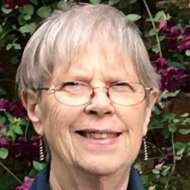
Agnes Winter
A personal obituary for Professor Agnes Winter
The sheep world mourns
In early December 2025, the death of Prof. Agnes Winter was announced in her final
home in York, causing great sadness in Great Britain and across the continent.
Agnes Winter was one of the most prominent figures in the world of veterinary
medicine/sheep science in England and beyond.
Born on 6 July 1942 as Agnes Charlotte Mason on a farm in Yorkshire, Agnes
studied veterinary medicine at the University of Liverpool from 1960 to 1965 and then
worked and lived for almost 20 years in mixed practice in Wales. One of the first
farmers whose animals Agnes looked after as a young assistant and the first woman
in the practice at the time, Tom Winter, seized his opportunity and married the
‘practice advertisement’ on the spot. Agnes and Tom Winter lived until Tom's death
on the impressive Winter Farm in North Wales, overlooking the mouth of the River
Dee, where Agnes found time alongside her veterinary career to establish a highly
respected breeding programme for Wensleydale sheep. One of the highlights of her
breeding career was winning the prestigious ‘Golden Fleece’ at the Welsh
Agricultural Show for a yearling fleece.
In 1986, Agnes returned to her home university in Liverpool, where she completed
her doctorate on the problem of anaemia in lambs after the administration of cow
colostrum and obtained the British Diploma in Sheep Health and Production in 1988.
At Leahurst, the University of Liverpool's farm animal branch, she then devoted
herself to teaching students and providing further training for sheep farmers as a
lecturer. The high level of expertise of Liverpool University graduates in the field of
sheep medicine was largely due to her teaching. For a long time, an important focus
of her work was hoof health and the fight against foot rot, as well as general animal
welfare issues. As a consequence Agnes was appointed in 1991 to the expert group
of the Farm Animal Welfare Council of the British Ministry of Agriculture.
In 1995, her achievements were recognised with the British Sheep Industry Award, a
great honour that had previously been bestowed on only one veterinarian before her.
Naturally, Agnes was also involved in the leadership of the Sheep Veterinary Society
from the very beginning. In 1987, she was logically elected as the first woman to
serve as president of the society. The SVS was her family, and until shortly before
her death, attending the conferences was a natural part of her annual planning.
Agnes was also a founding member of the European College for Small Ruminant
Health Management in 2008. She had already participated in preparatory discussions
for the establishment of the college in South Africa in 2001.
In recognition of her many years of teaching and her work as Dean at Leahurst,
Agnes was awarded an honorary professorship in 2008 and received the British
Veterinary Association's award for outstanding merits in 2009.
Agnes Winter has published a large number of publications, books and manuals as
an author or co-author, which are still widely used by many veterinarians in England
and beyond: the Handbook for the Sheep Clinician, the Manual of Sheep Diseases
and Lambing Techniques, and the book Lameness in Sheep are just a few examples.
Agnes visited Germany several times and particularly enjoyed making short trips from
Bavaria to Salzburg, the home of Mozart, whom she was particularly fond of.
The opening melody played at her funeral in York, attended only by her closest
friends and family, was a cantata by J.S. Bach: ‘Sheep may safely graze’ (text by
Salomon Franck, BWV 2024), which was virtually the deceased's motto in life.
Her reserved, friendly and unpretentious manner, her dedication to sheep medicine,
her willingness to share her extraordinary expertise with colleagues and sheep
farmers at any time and without self-interest, made Prof. Agnes Winter one of the
greats in our profession, and those who knew her personally are proud and grateful
for her friendship. We miss her very much.
Christiane Benesch, Martin Ganter